Showing posts with label General. Show all posts

Thursday, 15 December 2011

Guidelines For Readers


Posts :  Most of the posts that involved data, design types, and facts are taken from different sources.

Click HERE It will lead readers to the original  source/ references/ original information of the data, or information about the post.

Discussion parts : Posts that contained words such as "I" or "Nuclear Boy believes" are the discussion parts from the authors of this blog. It is actually being written based on our knowledge. Credit to Dr Nor Azlan Mostafa (Head of Nuclear Energy Unit, Tenaga Nasional Berhad). 

Links  : All the links to the nuclear websites such as TNB, WNA, IAEA, and others can be accessed from here. Please click the pictures of those organizations and companies at the top right of this blog.


Think Nuclear, Think Green,

~Nuclear Boy, Window For Our Future~

Wednesday, 14 December 2011

Informative Talk by Prof Michihiro Furusaka

A Nuclear Talk organised by the collaboration of Mechanical Department, College of Engineering UNITEN has been held successfully on 8th of December 2011. The talk intended to broaden local students view on the current nuclear technology as has been developed by other country. 

The Talk has been delivered by Prof Michihiro Furusaka, from Graduate School of Engineering, University of Hokkaido, Japan. His main interests of research are neutron science, instrumentation/neutron radiation source and the device. Currently, he does actively involve in new mini-focusing small angle neutron scattering instrument. In this talk, Prof. Michihiro Furusaka enlightens us on his involvement in neutron scattering and its relations to Parkinson’s and hair follicles. He explains about quantum beam and its applications; including in nuclear engineering.


Prof. Michihiro Furusaka

What is Quantum Beam?
The origin of “quantum beam” can be found from the discovery of radiation. X-rays were discovered from natural radioisotopes, and other radiation such as α, β, γ-rays, and neutrons were found afterwards.
It is well known that α-rays are helium nuclei, β-rays are electrons and X-rays and γ-rays are electromagnetic waves (another type of light). In the beginning, natural radiation sources (radioisotopes) were used for radiation research. Recent progress in technology provides artificial radiation sources, such as ion/electron accelerators, ultra-high intensity laser systems, synchrotron radiation, spallation neutron sources and nuclear reactors for the utilization of various beams.
These beams obtained from artificial radiation sources provide desirable characteristics such as high intensity, high coherence, monochromaticity, short-pulse, micro-focus and so on. Such highly controlled artificial radiation is referred to as a “quantum beam”.


Furthermore, Prof Dr Michihiro Furusaka also explained about the situation of nuclear scattering and proton particle beam accelerators in Malaysia.
What is Neutron Scattering?


Small-angle scattering (of light, X-rays, and neutrons) is a unique nano-structural characterization technique capable of obtaining exactly this; providing average morphological parameters over volumes ranging from cubic micrometers to cubic centimeters. The widespread adoption of this technique, however, has been hindered by a complicated data interpretation as well as instrumental limitations.
He started of the talk by giving a brief overview of the current situation  in large neutron facilities. He also said that Small Angle Neutron Scattering instrument (SANS) are huge and expensive. Maintaining a neutron facility is expensive and not always available in developing countries. The instruments also requires lot of manpower and budget to maintain SANS machine
Research activities using neutron scattering techniques are strongly hampered by its limited machine-time availability. We need very large facilities, either a research reactor or an accelerator driven neutron source, and the number of such facilities all over the world is rather limited. Also true is the number of instruments at such facilities. As a result, getting machine time of one of such instruments is also severely limited; often they are oversubscribed by a factor of three or more.
In case of X-ray, there are a lot of laboratory based X-ray instruments all over the place. Instruments are commercially available; researchers can test their ideas or new samples without writing a proposal; many researchers know how to analyze data. If you need a more powerful instrument, synchrotron radiation facilities are there.
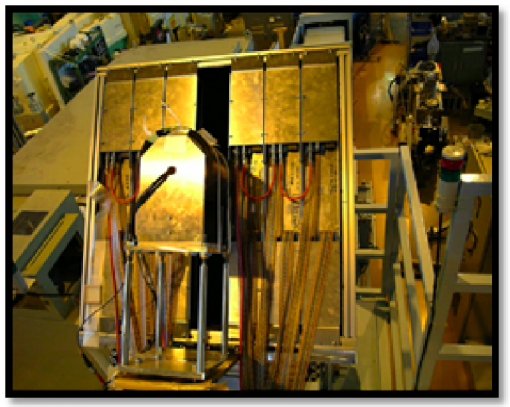
One way of overcoming this situation around neutron scattering technique, especially for SANS instrument, would be to develop a compact unit instrument that can be installed many on a beamline. The unit should be of low cost and can also be installed at low power accelerator based neutron sources. The answer to this is the mfSANS instrument. By using a neutron-focusing technique, like an ellipsoidal mirror developed, a very compact SANS instrument was made. Current ones are 2.5 and 4m in total lengths. Many devices have to be developed, such as high intensity monochromator, beam branching device, high quality focusing mirror, and detector with high-resolution high-count-rate/highdetecting efficiency. Also important is to develop easy to use software.
Prof Dr Michihiro Furusaka successfully obtained about 2.5 mm FWHM focused beam at the detector position using a 2 mm aperture at one of the two focal points of the focusing mirror. SANS data was obtained from standard samples, such as Ni powder of 20 nm in diameter and micro-separated block-copolymer DI33.
He highlighted the issues of SANS for low power reactors; which is the efficiency of conversing collimator and loosely focused beam. The possible solutions proposed are converging multi-holes collimator from a bigger sample, and utilizing loosely focused beam by focusing mirrors.
The lecture was cut short due to time constraints, but it was a very informative and eye opening lecture about quantum beam technology and its role in nuclear engineering.


We were very honored to have Prof Michihiro Furusaka as a speaker to this talk as we learnt a lot of new things about nuclear engineering. To conclude this, we have some pictures taken during his talk. 


Tuesday, 13 December 2011

The Survey Responses

Survey Analysis

Survey analysis
The survey data clearly indicate that a majority of the public favors the use of nuclear energy. The survey was conducted from 24th November 2011 until 10th December 2011, approximately 57% of the public supported nuclear energy and approximately 43% of the public opposed nuclear power. The respondents came from various countries such as Ireland, Qatar, Japan, Vietnam, and absolutely from several state in Malaysia. In general, support for nuclear power increased with educational level. Those with low educational attainment indicated greater opposition to nuclear power than was the highly educated group. On the average, there was 60% more support for nuclear power among those with the highest educational attainment. Differences in support or opposition to nuclear power among respondents from different regions of the country were small in magnitude. However, consistent differences in support for nuclear power were found between residents of the Western states of Malaysia and those from develop country.

Reasons for favoring nuclear power
The reasons usually given for favoring nuclear power center around nuclear power as a good and needed energy source, the economics of nuclear power (keep electric tariff low), the belief that nuclear power conserves other resources, and the belief that nuclear power produces clean energy or is less polluting than other energy sources (reduce C02 emission). A majority (73%) set the reasons for supporting nuclear power is to ensure continuous energy supply. The  main reason was the belief that there is an unlimited or abundant source of nuclear fuel. The second major set of reasons for supporting nuclear power involved an economic consideration which is to keep low electric tariff. This is because it provided cheaper electricity; 42% of the respondents gave this reason. The percentage is same as to reduce CO2 emission and this indicates that the respondent concern about the environment. In summary, the main reasons for favoring nuclear power have involved the low perceived cost of nuclear power, the comparatively nonpolluting effect of nuclear power, and the need for nuclear power as an energy source.

Factors and Arguments about nuclear power plant.
Arguments for and against nuclear power have been elicited by a wide variety of answered. In general, reasons for opposition centered on safety concerns, nuclear wastes, pollution, and the confident towards operator’s skills. From this survey, the safety issues associated with nuclear power have been a primary concern of the public throughout the history of nuclear power. The specific dangers most frequently volunteered by respondents included danger from nuclear power plant accidents and explosions, danger of radiation contamination from power plants, and danger from nuclear waste disposal. On the average 31% of the total public believed that nuclear waste disposal is a major problem. Given these opposing findings, the conclusion drawn is that concern over dangers fluctuates over time. It is sad to know that it has remained stable since 1986 as the main reason for opposing nuclear power, because of the Chernobyl disaster. However, a majority of the respondents believed that technology could solve the safety problems associated with nuclear power, including the safety problems associated with radioactive waste disposal.

Do you confident in utility company’s ability to operate a nuclear power plant safely and doing a good job of protecting the environment?


From the survey about 35% respondents are not really confident in utility company’s ability to operate a nuclear power plant safely and doing a good job of protecting the environment. The reason why is they might think that the operator’s skills and knowledge are not enough. Early exposure about technical skills and any necessary knowledge about nuclear power plant must be given to all workers before they can be certified as "qualified" to work in the power plant to make sure only the highly trained workers are allowed to work in the plant, this step must be implemented. 

Implementation of nuclear energy in a country will help economic growth. Is it true?

59% of the respondents agreed, 20% disagreed, and 22% were undecided. A majority of respondents see nuclear power as providing economic benefits. With the Malaysian government’s goal to be a developed nation in 2020, depending on renewable energy like coal and natural gas alone is not enough to power the industrial needs of modern Malaysia. When the nuclear power plant were built it would be more business would come to the community and create more jobs. In this globalization era, there is no way for our country to be left behind. Energy is the most important aspect for a country to move forward. Malaysia is in a crossroad and our country has to make a decision, which one is effective, and most importantly, is it worthy of the risk.

How important do you think nuclear energy will be in meeting this nation’s electricity needs in the years ahead?
A majority in range 1% to 43% respondents who favored nuclear power believed that atomic power should be used to provide electricity because it would provide cheaper electricity. They believed that nuclear power was more efficient and more powerful than other source or energy. Other reasons were that nuclear power is a good source of energy or is a good source for the future, nuclear power helps to achieve energy independence, and that there is an abundant source of nuclear fuel.

Promoting renewable energy sources such as solar and wind power, is a better way of tackling climate change than nuclear power. Is it true?
Most of the respondents agree in this statement. Even though majority agree with development of nuclear power but they still believe that there have another way to tackling the climate change other than nuclear energy. Solar power received positive assessments in terms of its health and safety impacts.  However, by using other renewable sources like solar, wind and biomass is certainly not a good option since growing demand will eventually overtake supply. The nuclear fuel is the best solution, it can save the environment since nuclear fuel will release a very low amount of carbon compared to current fuel mix for power generation, and in cost aspect, it is much more affordable for our nation.

Interpretation of Unsure Responses
Such "don't know" responses may indicate either ambivalence or indifference toward the issue area. Since the percentages in this category are often as large as the percentage opposed it is of considerable interest to know who comprises the category. Several hypotheses about such responses will be considered. First, these respondents may be apathetic, uncommunicative, and/or uncooperative with interviewers. Perhaps they shrug off questions with a "can't answer" or "don't know" response rather than giving serious consideration. The other hypothesis about respondents in the unsure category is that they are truly without nuclear opinions. Considerable evidence suggests that much of the public knows little about nuclear power, and that many do not care one way or another.

Regards
Nuclear Boy

Tuesday, 6 December 2011

Suggest Ways Forward for Malaysia

Recently Malaysian government has given approval to the Ministry of Energy, Green Technology and Water to look into identifying suitable sites for the country’s first nuclear power plant which was expected to be operational around the year of 2021. A lot has been talked about alternative energy such as solar and biomass, but these types of energy will not be enough to meet our country’s demand, plus they are all in early stage of development, the price is much higher and the efficiency has not been proven.   

Spending millions of money in research field is good but keep in mind that the year of 2020 is coming very soon, and we do not have much time to focus on these researches. We can do the research but at the same time, the nuclear power plant should be built. It has been there around the world for more than 50 years, the efficiency has been proven, and we can look around globally to learn with other countries and take note of the advancement in technology of nuclear.  

In conjunction with environmental, health impact and risk about nuclear energy, the security of nuclear power nowadays is very advanced. No doubt it is not 100% foolproof, but with advanced technology, the system of a nuclear reactor is designed to totally shut down if any errors occur. In addition, there will be regular checks for radioactive leakage from the reactor. 

Nuclear energy can lead to a cleaner environment as a nuclear power plant does not release any harmful material to the environment like chemical or greenhouse gases. It is significantly low of carbon emission, and wastes from the nuclear core are also well managed. People will think the Chernobyl disaster in 1986 is a very good example, and use this as main reason to oppose this move. 

They stress on that nuclear can cause health problems to affect residents and contaminate the surrounding farmland. In my opinion, this is quite contradicts to the statement made by Masterskill University College of Health Sciences deputy vice-chancellor Prof Datuk Proom Promwichit, “many people were unaware that nuclear power was the safest source of energy compared to others.” He said so far, its use only involved a risk of 0.007 per cent and there had yet to be accidents involving nuclear energy reactors, unless caused by human negligence or sudden unexpected tsunami in Japan. I came into conclusion that do Americans, Koreans or even Japanese did not aware of this problem? But why they still use nuclear energy in their countries even after 3 major accidents? 

If we talk about social impacts and other parameters, there is always advantage and disadvantage. It all comes down to how people are being informed, and personal acceptation. We would like to highlight that by having nuclear technology in our country, it will help to generate interest in people’s mind. This advanced technology will be the catalyst for young generations to cultivate their interest in science. This will help our education system, and with this there will surely be subjects like atomic or nuclear radiation being added even in school level.  

Looking at the alternatives of energy to invest for our country’s future, I can rule fossil fuels out immediately. We also faced many problems with every form of alternative energy. The most efficient source of renewable energy for our country has been hydroelectric power. The problem hydroelectric power creates more problems than it solves. Building a large dam necessarily floods an enormous region behind the dam which in turn can displace tens of thousands of people. So far, there is only one good solution to cope up effectively with our energy demands, it is the nuclear energy.

Concerns about health, environment effects and risks or terrorism are really something to consider, but we can control these by implementing new rules about nuclear, much more sophisticated hospitals specialized for radiation checking, and a better defence system to protect uranium and nuclear power plant from being misused. We can overcome these problems, and at the same time, improving our country’s defence system, hospitals, education, money, and the most important part is to ensure that we can meet with the demand power generation for our developed nation and it’s all in one name, nuclear energy.

Looking at the bad side, people who are living around the area of the nuclear power plant will have fear factor, plus with the nuclear name it is not possible to spark any interest of terrorism since we are living in the terrorism-prone area. But all of these can be avoided if government provides people with sufficient information about nuclear energy. The risk of accidents or leakage of the reactor is always a concern, but everything has a risk. Some level of national sacrifice is needed in this respect.   

 Prime Minister Of Malaysia Is Considering All Aspects For Our Nation.

                                                                                                                                                                  Regards,                                                                                                                                         Nuclear Boy.

Saturday, 19 November 2011

Advantages vs Disadvantages

What are the Advantages of Nuclear Energy?
  • Nuclear reactions release a million times more energy, as compared to hydro or wind energy. Hence, a large amount of electricity can be generated. 
  • The biggest advantage of nuclear energy is that there is no release of greenhouse gases (carbon dioxide, methane, ozone, chlorofluorocarbon) during nuclear reaction. The greenhouse gases are a major threat in the current scenario, as they cause global warming and climate change. As there is no emission of these gases during nuclear reaction, there is very little effect on the environment.
  • Nuclear reactors make use of uranium as fuel. Fission reaction of a small amount of uranium generates large amount of energy. Currently, the high reserves of uranium found on Earth, are expected to last for another 100 years.
  • High amount of energy can be generated from a single nuclear power plant. Also, nuclear fuel is inexpensive and easier to transport.

What are the Disadvantages of Nuclear Energy?
  • Nuclear energy can be used for production and proliferation of nuclear weapons. Nuclear weapons make use of fission, fusion or combination of both reactions for destructive purposes. They are a major threat to the world as they can cause a large-scale devastation.
  • Requires large capital costAround 15-20 years are required to develop a single plant. Hence, it is not very feasible to build a nuclear power plant. The nuclear reactors will work only as long as uranium is available. Its extinction can again result in a grave problem.
  • The waste produced after fission reactions contains unstable elements and is highly radioactive. It is very dangerous to the environment as well as human health, and remains for thousands of years. It needs professional handling and should be kept isolated from the living environment. The radioactivity of these elements reduces over a period of time, after decaying. Hence, they have to be carefully stored. It is very difficult to store radioactive elements for a long period.
The Chernobyl disaster that occurred at the Chernobyl Nuclear Power Plant in 1986 in Ukraine, was the worst nuclear power plant disaster. One of the nuclear reactors of the plant exploded, releasing high amount of radiation in the environment. It resulted in thousands of casualties, mostly due to exposure to harmful radiation. One cannot deny the possibility of repetition of such disasters in future.


Thursday, 17 November 2011

Regards From The Nuclear Boy!!!

Introducing Myself, The Nuclear Boy! 
A Technology To Change The Future Of Mankind!!  


I am here today to talk about the future – our collective future – and how we can share our thoughts together to support Nuclear Energy to become one of the energy sources in Malaysia. For the sake of our future prosperity, for the sake of our future security, for the sake of the environment, and most importantly, for the sake of our children and our children’s children, I urge you all to join with us to support a new and innovative way to power-up our nation!

I believe that many of Malaysia’s economic problems are a result of “energy costs”. For many years our nation’s establishment politics and media have demonized nuclear power and it is time that our citizens appraise themselves of the science and engineering of nuclear technology instead of political and media rhetoric.  

With the depletion of these natural sources, it is no doubt that the price for natural sources will go higher. If we keep clinging to coal, natural gas etc, it will not help the future development of our country. The government will have to increase the electricity tariff to cope up with the fuel price, and it will increase the operational cost for industries. There is no way for investors and industry players to put their money in Malaysia.  


Its SAFE, CHEAP AND CLEAN. What is her name? Its NUCLEAR guys!!

This will affect our economic growth. That is why in many decisions, money mattered most. If we choose nuclear as power source, it is great because the cost for operating the nuclear plant is stable and it is expected to be capable of offering a much lower electricity tariff. When a competitive and stable source of power is in place, inadvertently, it will boost the growth of industry and provide more job opportunities. 

A lot has been said, so, it's time to learn something about nuclear energy, I hope with this interesting 4 minutes video, you will have a basic understanding about what nuclear energy is all about. Enjoy watching guys!


                Nuclear Power To The People                  


We have a better option, the most advanced technologies ever invented and it has been there for more than 50 years. The Nuclear Energy! You will never do anything in this world without courage. It is the greatest quality of the mind next to honor. We must take a big step toward greater good. Guess who will be in line to implement this important technologies for our country?


        The nation’s largest power supplier Tenaga Nasional Bhd (TNB) is looking towards starting its first nuclear power plant by 2025 once it gets the go-ahead from the government.